Zakat Calculator
Zakat: Meaning, Importance, Nisab, Zakat Calculator, and Complete Islamic Guide
Zakat is one of the five pillars of Islam and a fundamental act of worship that purifies wealth and supports social justice. It is not merely charity but an obligatory duty upon eligible Muslims. Understanding Zakat correctly is essential to fulfill this obligation according to Islamic teachings.
This article explains everything about Zakat—its meaning, Islamic perspective, Nisab, calculation method, assets included, who must pay, who can receive it, and common questions.
What Is Zakat?
The word Zakat comes from the Arabic root “zakā”, meaning purification, growth, and blessing. In Islam, Zakat refers to a fixed portion of wealth that Muslims must give annually to those entitled to receive it.
Definition (Islamic)
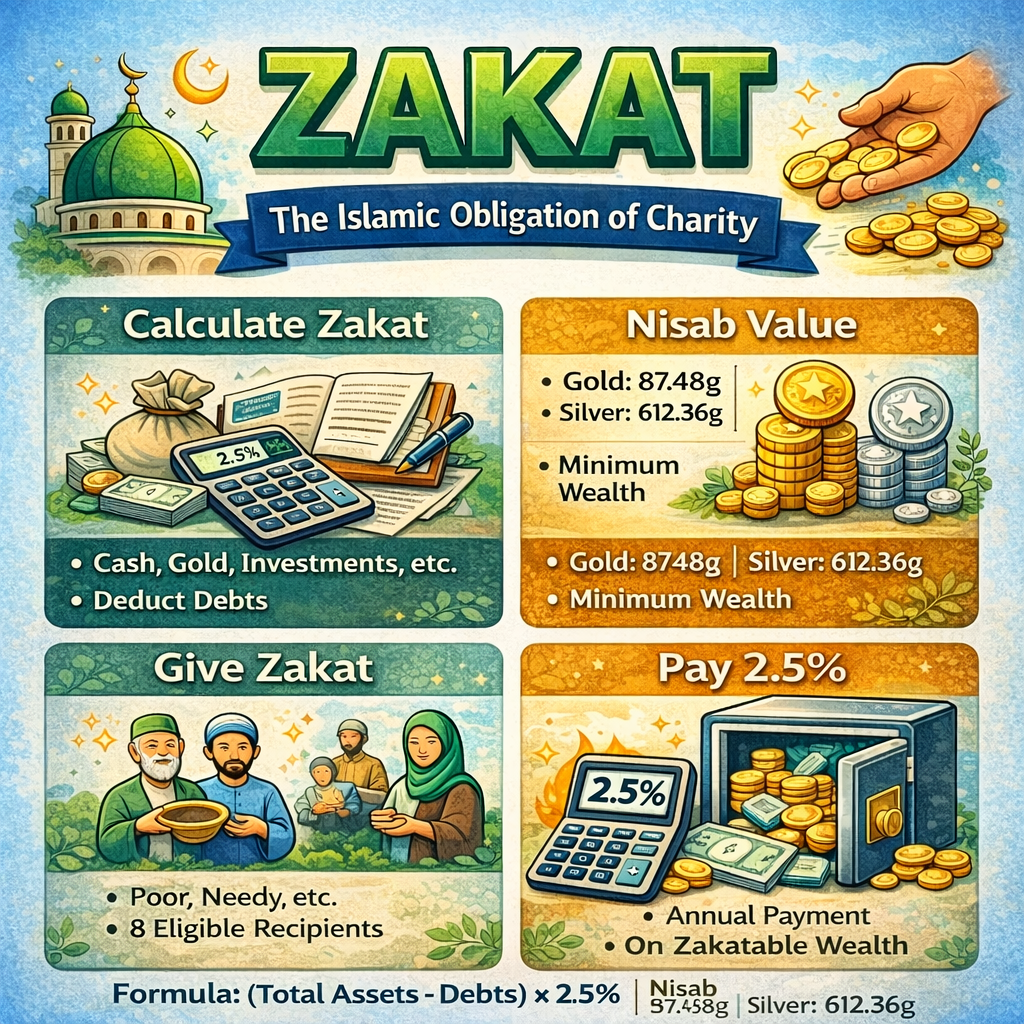
Zakat is a compulsory annual payment of 2.5% on eligible wealth, given to specific categories of people, once the wealth reaches the Nisab and is held for one lunar year (Hawl).
Importance of Zakat in Islam
Zakat holds immense importance in Islam and is mentioned alongside Salah in the Qur’an multiple times.
Qur’anic Evidence
“And establish prayer and give Zakat…”
— Surah Al-Baqarah (2:43)
Hadith
The Prophet Muhammad ﷺ said:
“Islam is built upon five pillars… to give Zakat.”
— Sahih Bukhari
Why Zakat Is Important
- Purifies wealth and soul from greed
- Reduces poverty and inequality
- Strengthens community bonds
- Brings barakah (blessing) in wealth
- A test of obedience to Allah
Who Must Pay Zakat?
Zakat is obligatory on a Muslim who meets the following conditions:
Must be Muslim
Must be adult and sane
Must own wealth above the Nisab
Wealth must be fully owned
Wealth must be held for one lunar year (Hawl)
What Is Nisab?
Nisab is the minimum amount of wealth a Muslim must own before Zakat becomes obligatory.
Nisab of zakat
Zakat Nisab is determined using gold or silver values:
| Metal | Weight | Basis |
| Gold | 87.48 grams | Higher threshold |
| Silver | 612.36 grams | Lower threshold |
Most scholars recommend using silver Nisab today, as it benefits the poor by making more people eligible to pay Zakat.
Types of Wealth on Which Zakat Is Due
Zakat is paid on specific types of assets, not on everything a person owns.
1.Cash & Savings
Cash at home
Bank balances
Savings accounts
2. Zakat on Gold & Silver
Jewelry (according to most scholars)
Coins, bars
Stored gold/silver
3. Business Assets
Inventory for sale
Business cash
Trade goods
4. Investments
Stocks (trade value)
Mutual funds
Investment accounts
5. Loans Given
Money you expect to receive back
Assets Exempt from Zakat
- Personal residence
- Clothes for daily use
- Household items
- Personal car
- Tools used for work
Liabilities & Debts Deduction
Before calculating Zakat, you can deduct:
Immediate debts
Outstanding bills
Short-term loans payable
how to calculate zakat ?
Standard Formula
Zakat = (Total Zakatable Assets − Liabilities) × 2.5%
Zakat Rate
The standard Zakat rate is:
✅ 2.5% (1/40th) per lunar year
This applies to cash, gold, silver, business assets, and investments.
Who Can Receive Zakat? (Asnaf)
Allah clearly defines Zakat recipients in the Qur’an:
“Zakat is only for the poor, the needy…”
— Surah At-Tawbah (9:60)
8 Categories of Zakat Recipients
Poor (Al-Fuqara)
Needy (Al-Masakin)
Zakat administrators
New Muslims
Freeing slaves
Debtors
In the cause of Allah
Stranded travelers
📌 Zakat cannot be given to parents, children, spouse, or wealthy people.
When Should Zakat Be Paid?
- Once your wealth completes one lunar year
- You may pay in advance
- Delaying without reason is sinful
Zakat on Salary – Is It Required?
Salary itself is not taxed, but:
Saved salary after one year
Amount above Nisab
→ Zakat is compulsory
Conclusion
Zakat is a pillar of Islam, a means of purification, and a powerful system of social welfare. Understanding Nisab, eligible assets, and proper calculation ensures that Zakat is paid correctly and sincerely, fulfilling both religious duty and humanitarian responsibility.
Using a Zakat Calculator helps Muslims calculate accurately and avoid mistakes, ensuring compliance with Islamic principles.
Popular Calculator Tools
- Interest Rate Calculator
- Annuity Calculator
- Annuity Payout Calculator
- ROI Calculator
- Sales Tax Calculator
- VAT Calculator
- BMI Calculator
- Calorie Calculator
- Body Fat Calculator
- BMR Calculator
- Ideal Weight Calculator
- Lean Body Mass Calculator
- Percentage Calculator
- Area Calculator
- GPA Calculator
- CGPA Calculator
- Age Calculator
- Period Calculator
- Loan Calculator
- Ovulation Calculator
- Home Equity Line of Credit (HELOC) Calculator
- Blood Pressure Calculator
- Pregnancy Calculator
- Conception Calculator
- Due Date Calculator
- Pregnancy Weight Gain Calculator
- Pregnancy Conception Calculator
- Total Daily Energy Expenditure (TDEE) Calculator
- Fat Intake Calculator