
Pregnancy Calculator
Pregnancy Guide: Trimesters, Due Dates, Detection Methods, Management, Nutrition & Pregnancy Calculator
Pregnancy is one of the most meaningful experiences in a woman’s life. From the moment of conception to the birth of a baby, the body undergoes profound changes. Understanding pregnancy — including its trimesters, how due dates are calculated, common detection methods, how to manage health, and what nutrition is essential — empowers expecting parents to make informed decisions.
This pregnancy guide covers everything you need to know, in detail, with easy-to-understand explanations and medically accurate information.
Using our pregnancy calculator helps make your pregnancy journey more organized and informed, providing a clear and reassuring overview of every stage of development.
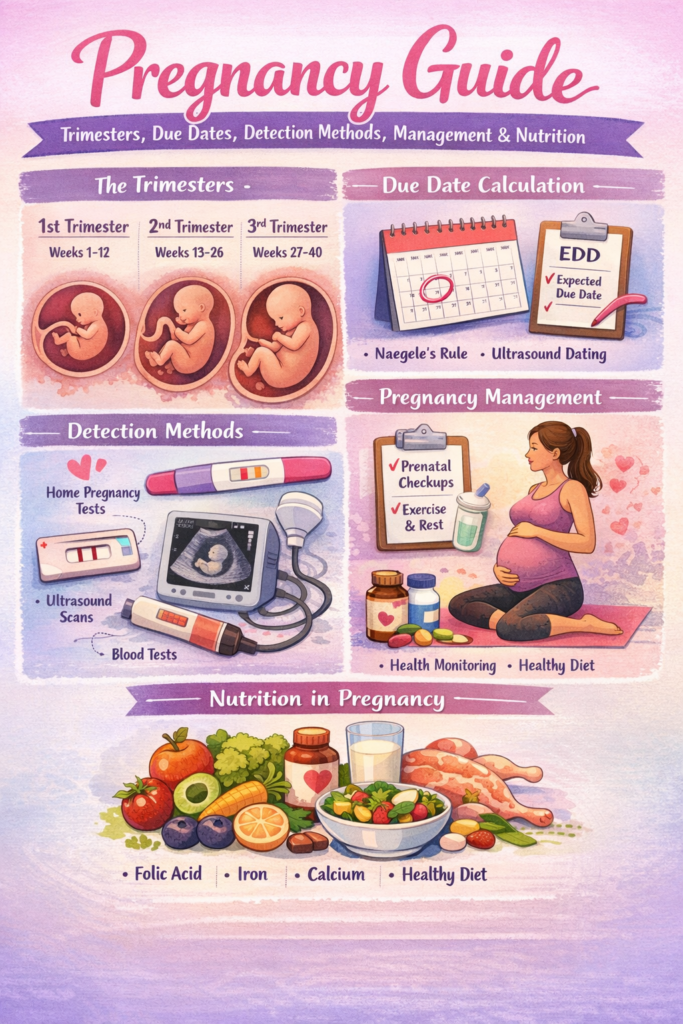
What Is Pregnancy?
Pregnancy is the period during which a fetus develops inside a woman’s uterus. It begins with conception — when a sperm fertilizes an egg — and usually lasts about 40 weeks or 9 calendar months. Healthcare providers measure pregnancy from the first day of the last menstrual period (LMP), not the date of conception.
Because pregnancy involves rapid changes in both the mother and the growing baby, medical professionals divide it into three key phases called trimesters, each with its own milestones, symptoms, and healthcare needs.
How Pregnancy Is Calculated: Due Dates Explained
One of the first questions people ask after a positive pregnancy test is: When is my baby due?
Standard Due Date Calculation
Doctors typically calculate the due date based on:
The first day of the last menstrual period (LMP)
Average cycle length (often 28 days)
Using this method, the estimated due date (EDD) is approximately:
280 days or 40 weeks after the LMP
Other Methods to Calculate Due Date
While the LMP method is most common, other approaches include:
Ultrasound Dating: Ultrasound performed in the first trimester can estimate gestational age by measuring the embryo/fetus. It is the most accurate method for dating, especially when menstrual cycles are irregular.
Conception Date: If you know the exact date of conception (e.g., in fertility treatments or natural conception with tracking), due date may be estimated by adding 266 days.
IVF Transfer Date: When in vitro fertilization (IVF) or embryo transfer is used, doctors calculate due dates based on the embryo age at transfer (e.g., day 3 or day 5 blastocyst), and then add ~38 weeks.
Pregnancy Weeks vs Months
Pregnancy is usually described in weeks rather than months because fetal development corresponds more precisely to weekly changes. However, for general understanding:
1st trimester = Weeks 1–13 (~Month 1–3)
2nd trimester = Weeks 14–27 (~Month 4–6)
3rd trimester = Weeks 28–40 (~Month 7–9)
The Three Trimesters
Pregnancy is divided into three trimesters. Each trimester involves different physical changes and developmental milestones for the baby.
First Trimester (Weeks 1–13)
The first trimester is a period of rapid development. It begins at conception and continues through week 13.
Fetal Development Milestones
Weeks 1–4: Zygote forms, implants in the uterus
Weeks 5–8: Major organs begin developing (heart, brain, limbs)
Weeks 9–13: Baby enters fetal stage; facial features take shape
Mom’s Body Changes
Missed period (often the first sign)
Morning sickness, nausea or vomiting
Fatigue and breast tenderness
Frequent urination
Mood swings
Important Notes
Most miscarriages occur during the first trimester.
Prenatal vitamins (especially folic acid) are critical to prevent neural tube defects.
Second Trimester (Weeks 14–27)
Often referred to as the “golden period,” the second trimester brings relief from early symptoms and visible baby growth.
Fetal Development
Rapid growth of all body systems
Detectable heartbeat by Doppler
Movement felt by mother (quickening; typically around week 18–20)
Gender often identifiable via ultrasound
Mom’s Body Changes
Belly becomes more noticeable
Relief from nausea
Increased energy
Possible back pain or leg cramps
Important Screenings
Anatomy ultrasound (usually around week 18–22)
Blood tests for genetic conditions
Third Trimester (Weeks 28–40+)
Final maturation and size gain occur in the third trimester. The baby prepares for birth.
Fetal Development
Lungs, brain, and immune system continue maturing
Baby gains the most weight
Head typically moves down into pelvis
Mom’s Body Changes
Shortness of breath
Back discomfort
Braxton Hicks contractions
Frequent urination
Swelling of hands, feet
Important Considerations
Monitor for signs of pre-eclampsia (high blood pressure, swelling, headaches)
Gestational diabetes screening (typically around week 24–28)
Group B strep may be tested late in pregnancy
Pregnancy Detection Methods
Understanding how pregnancy is detected helps interpret results accurately.
Home Pregnancy Test
Detects hCG (human chorionic gonadotropin) hormone in urine
Reliable after first day of missed period
Accuracy increases with time
Tips for Use
Test first morning urine for highest hormone levels
Follow instructions carefully
Blood Tests for Pregnancy
Quantitative hCG test: Measures hCG level precisely; can detect pregnancy earlier than urine test
Qualitative hCG test: Simply positive/negative result
Blood tests are performed in clinical settings and more sensitive than home testing.
Ultrasound Confirmation
Transvaginal ultrasound can detect pregnancy early (around 5–6 weeks)
Confirms fetal heartbeat and gestational sac
Prenatal Care & Health Management
Prenatal care is essential for a healthy pregnancy. Regular check-ups allow doctors to:
Track fetal growth
Monitor mom’s health
Detect and manage complications early
Typical Prenatal Visit Schedule
First visit: Early pregnancy confirmation & baseline labs
Every 4 weeks until 28 weeks
Every 2–3 weeks until 36 weeks
Weekly until delivery
Common Tests During Pregnancy
Blood pressure & weight check
Urine tests for protein and glucose
Blood tests (anemia, Rh factor, infections)
Ultrasounds for anatomy and growth
Glucose screening for gestational diabetes
Nutrition During Pregnancy
Good nutrition supports both mom and baby. During pregnancy, nutrient requirements increase.
Essential Nutrients
Folic Acid
Critical for neural tube development
Recommended 400–800 mcg daily
Found in leafy greens, legumes, fortified foods
Iron
Supports blood supply
Prevents anemia
Sources: red meat, spinach, beans
Calcium
Builds baby’s bones
Found in dairy products, fortified plant milks
Protein
Essential for fetal tissue development
Found in meat, poultry, fish, eggs, legumes
Omega-3 Fatty Acids (DHA/EPA)
Supports brain and eye development
Found in fish, flaxseed, walnuts
Prenatal Vitamins
Most providers recommend taking prenatal supplements throughout pregnancy.
Weight Gain in Pregnancy
Healthy weight gain supports fetal growth.
Typical recommendations (based on pre-pregnancy BMI):
- Underweight: 28–40 lbs
- Normal weight: 25–35 lbs
- Overweight: 15–25 lbs
- Obese: 11–20 lbs
Always follow your healthcare provider’s personalized recommendations.
Exercise and Physical Activity
Staying active during pregnancy has many benefits:
- Reduces back pain
- Improves mood and energy
- Supports healthy weight gain
Safe exercises
- Walking
- Swimming
- Prenatal yoga
- Pelvic floor exercises
Avoid
- Contact sports
- High-impact jumping
- Heavy weight lifting without guidance
- Activities with fall risk
Common Pregnancy Symptoms and Remedies
Nausea & Morning Sickness
Ginger, crackers
Small frequent meals
Fatigue
Adequate rest
Gentle exercise
Heartburn
Small meals
Avoid spicy or greasy foods
Constipation
High-fiber foods
Plenty of water
Gentle activity
Swelling
Elevate legs
Avoid standing long periods
Complications in pregnancy
While many pregnancies are healthy, complications can occur. Recognizing warning signs is crucial.
Pre-eclampsia
Symptoms:
- High blood pressure
- Swelling in hands/face
- Severe headache
Gestational Diabetes
- High blood sugar during pregnancy
- Screened between weeks 24–28
- Managed with diet, exercise, and medication if needed
Preterm Labor
Symptoms before 37 weeks:
- Regular contractions
- Lower back pain
- Pelvic pressure
Contact your provider immediately.
Miscarriage
- Often occurs early in pregnancy
- Symptoms: heavy bleeding, severe cramps
- Requires medical evaluation
Breastfeeding and Postpartum Care
Preparing for postpartum is part of prenatal planning.
Breastfeeding
Benefits:
- Nutrients and immunity for baby
- Promotes bonding
Support: - Lactation consultant resources
Postpartum Health
- Emotional wellbeing (watch for postpartum depression)
- Physical recovery
- Follow-up doctor visits
Importance of Pregnancy Calculator
Our pregnancy calculator is a helpful tool that estimates your due date and tracks the progress of your pregnancy. By entering the first day of your last menstrual period or the date of conception, the calculator can determine which trimester you are in, predict important milestones, and provide insights into fetal development. It also helps expectant parents plan for prenatal checkups, monitor symptoms, and manage nutrition effectively. Using a pregnancy calculator can make the journey more organized, informed, and reassuring, giving you a clear overview of each stage of pregnancy
Popular Calculator Tools
- Period Calculator
- Loan Calculator
- Ovulation Calculator
- Home Equity Line of Credit (HELOC) Calculator
- Blood Pressure Calculator
- Conception Calculator
- Due Date Calculator
- Pregnancy Weight Gain Calculator
- Pregnancy Conception Calculator
- Total Daily Energy Expenditure (TDEE) Calculator
- Fat Intake Calculator
- Interest Rate Calculator
- Annuity Calculator
- Annuity Payout Calculator
- ROI Calculator
- Sales Tax Calculator
- VAT Calculator
- BMI Calculator
- Calorie Calculator
- Body Fat Calculator
- BMR Calculator
- Ideal Weight Calculator
- Lean Body Mass Calculator
- Percentage Calculator
- Area Calculator
- GPA Calculator
- CGPA Calculator
- Age Calculator
- Zakat Calculator