Conception Calculator
Conception Calculator: Meaning, How It Works, Fertile Window, and Pregnancy Planning Guide
Planning a pregnancy requires understanding your menstrual cycle and identifying the days when conception is most likely to occur. A Conception Calculator is a simple yet powerful tool that helps estimate fertile days, ovulation timing, and a possible due date based on your average menstrual cycle length.
This guide explains what conception is, how a conception calculator works, and all the important fertility terms used in the calculator results.
What Is Conception?
Conception occurs when a sperm fertilizes an egg released from the ovary during ovulation. This fertilized egg then travels to the uterus and implants itself, leading to pregnancy.
Conception does not happen on just one day. Instead, there is a fertile window, a few days during which pregnancy is most likely.
What Is a Conception Calculator?
A Conception Calculator is an online fertility tool that estimates:
- Most probable conception days
- Ovulation window
- Best intercourse days for pregnancy
- Pregnancy test date
- Next period start date
- Estimated due date (if pregnancy occurs)
The calculator uses two main inputs:
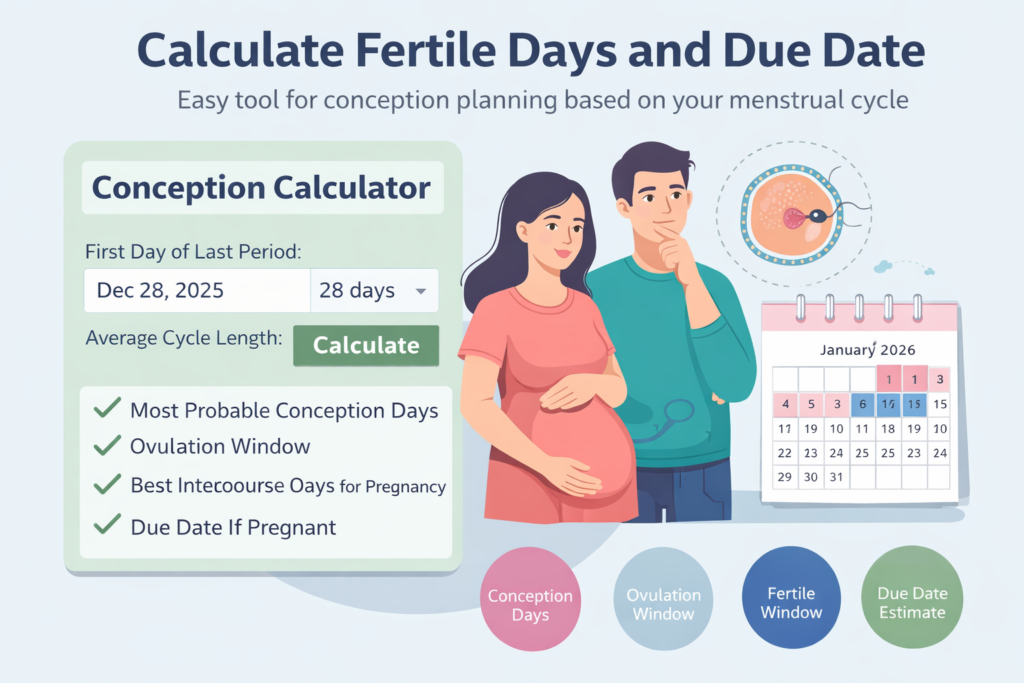
- First day of your last menstrual period (LMP)
- Average length of your menstrual cycle
Using medical fertility formulas, it predicts the most fertile days with high accuracy.
How Does a Conception Calculator Work?
The calculator is based on the fact that ovulation usually occurs about 14 days before the next period, regardless of cycle length.
Basic Fertility Formula
Ovulation Day = Cycle Length − 14
Once ovulation is identified, the calculator estimates surrounding fertile days and pregnancy-related dates.
Important Terms Used in a Conception Calculator
1. Most Probable Conception Days
These are the days when the chances of pregnancy are highest.
- Includes ovulation day and several days after
- Sperm can live up to 5 days, and the egg survives about 24 hours
- Having intercourse during this period greatly increases the chances of conception
2. Ovulation Window
The ovulation window is the short period when the ovary releases an egg.
- Usually lasts about 4–5 days
- The egg is available for fertilization during this time
- Ovulation timing varies based on cycle length
3. Best Intercourse Days for Pregnancy
These are the days when intercourse is most effective for getting pregnant.
- Includes days before and during ovulation
- Sperm survival makes intercourse before ovulation very important
- Doctors often recommend intercourse every 1–2 days during this window
4. Fertile Window
The fertile window is the total number of days when pregnancy is possible.
- Includes ovulation and surrounding days
- Typically spans 6–7 days
- A key concept in pregnancy planning and natural family planning
5. Pregnancy Test Date
This is the earliest recommended day to take a pregnancy test.
- Calculated based on the expected next period
- Testing too early may give false negatives
- For best accuracy, test after a missed period
6. Next Period Start Date
The estimated date when your next menstrual cycle may begin if pregnancy does not occur.
- Helps track cycle regularity
- Useful for fertility awareness and planning
7. Due Date If Pregnant
The calculator estimates a possible due date using a medically accepted formula:
Due Date = LMP + 280 days + (Cycle Length − 28)
This adjustment ensures accurate due dates even for long or short cycles.
Conception Calculator vs Ovulation Calculator
| Feature | Conception Calculator | Ovulation Calculator |
|---|---|---|
| Fertile days | ✔ Yes | ✔ Yes |
| Conception window | ✔ Yes | ❌ No |
| Due date | ✔ Yes | ❌ No |
| Pregnancy test date | ✔ Yes | ❌ No |
Popular Calculator Tools
- Period Calculator
- Loan Calculator
- Ovulation Calculator
- Home Equity Line of Credit (HELOC) Calculator
- Blood Pressure Calculator
- Pregnancy Calculator
- Due Date Calculator
- Pregnancy Weight Gain Calculator
- Pregnancy Conception Calculator
- Total Daily Energy Expenditure (TDEE) Calculator
- Fat Intake Calculator
- Interest Rate Calculator
- Annuity Calculator
- Annuity Payout Calculator
- ROI Calculator
- Sales Tax Calculator
- VAT Calculator
- BMI Calculator
- Calorie Calculator
- Body Fat Calculator
- BMR Calculator
- Ideal Weight Calculator
- Lean Body Mass Calculator
- Percentage Calculator
- Area Calculator
- GPA Calculator
- CGPA Calculator
- Age Calculator
- Zakat Calculator