Body Fat Calculator
Body Fat: –
Category: –
Fat Mass: –
Lean Mass: –
Ideal Body Fat: –
Weight Adjustment: –
Essential
Athlete
Fitness
Average
Obese
Body Fat Percentage: Health Impact, Risks, and Accurate Calculation Methods
What Is Body Fat Percentage?
Body fat percentage refers to the proportion of fat mass in your body compared to your total body weight. Unlike BMI, which only considers height and weight, body fat percentage provides a more accurate picture of body composition, distinguishing fat mass from muscle, bone, and water.
Maintaining a healthy body fat percentage is essential for overall health, physical performance, and disease prevention.
This Body Fat Calculator estimates your body fat percentage using accurate measurement methods and clear visual ranges. It helps you understand your fitness level, ideal body fat, and how much fat to lose or gain for better health.
Why Body Fat Percentage Matters for Health
Body fat plays vital roles in the body, such as:
Protecting organs
Regulating body temperature
Supporting hormone production
Providing energy reserves
However, excess body fat, especially visceral fat around internal organs, significantly increases health risks.
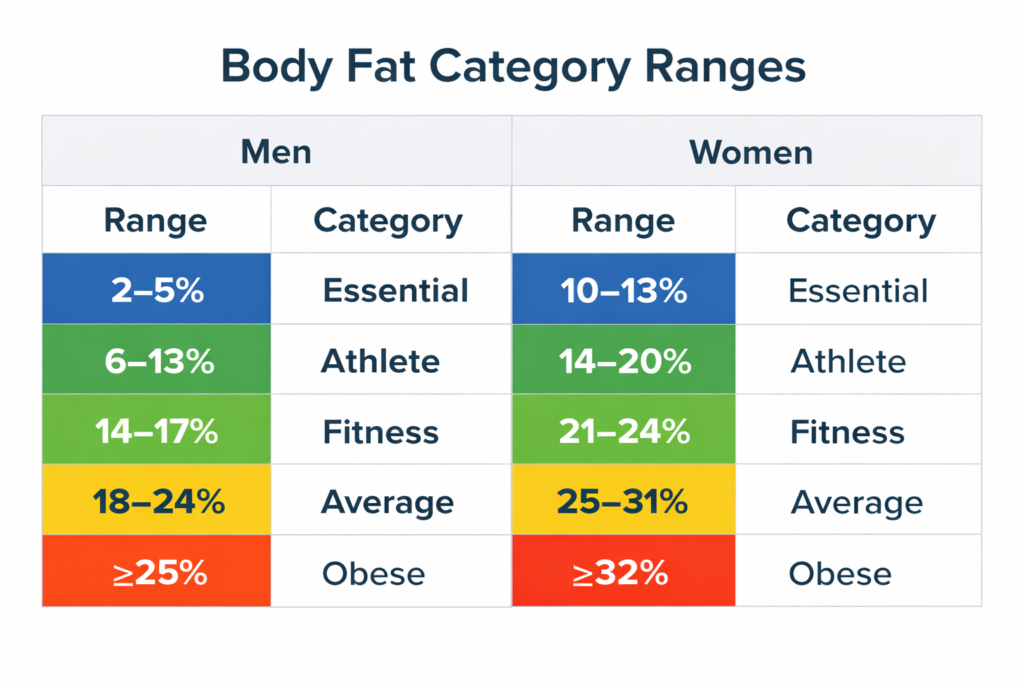
Healthy Body Fat Percentage Ranges
Healthy ranges vary by gender due to hormonal and biological differences:
Complications of Excess Body Fat
Having a high body fat percentage—particularly abdominal fat—can lead to serious health problems.
1. Cardiovascular Disease
Excess fat increases cholesterol levels, blood pressure, and inflammation, raising the risk of:
Heart attacks
Stroke
Atherosclerosis
2. Type 2 Diabetes
High body fat reduces insulin sensitivity, making blood sugar control difficult and increasing diabetes risk.
3. Hormonal Imbalances
Excess fat disrupts hormone regulation, affecting:
Testosterone and estrogen levels
Thyroid function
Fertility in both men and women
4. Joint and Mobility Problems
Extra body fat places stress on joints, leading to:
Knee and hip pain
Osteoarthritis
Reduced mobility
5. Respiratory Issues
Higher fat levels can impair lung function and increase the risk of sleep apnea.
6. Mental Health Effects
Studies show a strong link between high body fat and:
Depression
Anxiety
Low self-esteem
Risks of Extremely Low Body Fat
While excess fat is harmful, very low body fat also poses health risks:
Hormonal disruptions
Nutrient deficiencies
Weak immune system
Bone density loss
Increased injury risk
Balance—not extremes—is the key to optimal health.
How Body Fat Percentage Is Calculated
Several methods exist to estimate body fat percentage, each with varying accuracy.
U.S. Navy Body Fat Method (Circumference Method)
How It Works
The U.S. Navy method estimates body fat using body circumference measurements and height. It relies on the relationship between fat distribution and body dimensions.
Measurements Required
Men: Height, neck circumference, waist circumference
Women: Height, neck circumference, waist circumference, hip circumference
Formula Basis
The method uses logarithmic equations derived from population studies conducted by the U.S. Navy.
Accuracy
Fairly accurate for most adults
Error margin: ~3–4%
Pros
No special equipment needed
Easy to use at home
More accurate than BMI
Cons
Accuracy depends on correct measurement technique
Less accurate for very obese or extremely lean individuals
Best For
Online calculators
Fitness tracking
Military and general population assessments
BMI-Based Body Fat Estimation
How It Works
This method estimates body fat percentage using BMI combined with age and gender.
Common Formula
Body Fat % ≈ (1.20 × BMI) + (0.23 × Age) − (10.8 × Gender) − 5.4
(Gender: 1 for males, 0 for females)
Accuracy
Low to moderate
Error margin: 5–8%
Pros
Very simple
Requires only height and weight
Cons
Does not distinguish muscle from fat
Often overestimates fat in athletes
Underestimates fat in elderly individuals
Best For
Population-level analysis
Quick estimates when other data isn’t available
Skinfold Caliper Method
How It Works
This method measures the thickness of skinfolds at specific body sites to estimate subcutaneous fat, which is then converted into total body fat percentage.
Common Measurement Sites
Chest
Abdomen
Thigh
Triceps
Suprailiac
Subscapular
Accuracy
High when performed correctly
Error margin: 3–5%
Pros
Affordable
Widely used in gyms and sports science
Cons
Requires training
Results vary based on technician skill
Less accurate for obese individuals
Best For
Athletes
Fitness professionals
Regular progress tracking
Bioelectrical Impedance Analysis (BIA)
How It Works
A weak electrical current passes through the body. Since fat resists electricity more than muscle and water, the device estimates body fat percentage.
Common Devices
Smart scales
Handheld analyzers
Professional BIA machines
Accuracy
Moderate
Error margin: 3–6%
Factors Affecting Accuracy
Hydration level
Recent meals
Exercise
Alcohol intake
Pros
Quick and convenient
Non-invasive
Good for trend tracking
Cons
Sensitive to body water changes
Less accurate than lab methods
Best For
Home users
Regular monitoring rather than precise measurement
DEXA Scan (Dual-Energy X-ray Absorptiometry)
How It Works
DEXA uses low-dose X-rays to differentiate between fat mass, lean mass, and bone mineral density.
Accuracy
Very high
Error margin: 1–2%
Pros
Gold standard for body composition
Measures regional fat distribution
Provides bone density data
Cons
Expensive
Requires medical facility
Low radiation exposure
Best For
Medical assessment
Research
Athletes seeking precise data
Ideal Body Fat and Weight Management
Your ideal body fat percentage depends on age, gender, activity level, and health goals. Reducing excess fat should focus on:
Sustainable calorie control
Balanced macronutrient intake
Regular strength and cardiovascular training
Adequate sleep and stress management
Rapid fat loss methods can harm metabolism and muscle mass.
Improving Body Fat Percentage Safely
Prioritize whole foods
Increase protein intake
Strength train 2–4 times per week
Stay physically active daily
Avoid crash dieting
Track progress using reliable measurements
Final Thoughts
Body fat percentage is one of the most meaningful indicators of health and fitness. While weight alone can be misleading, understanding body fat helps guide smarter lifestyle choices and long-term wellness strategies.
Use a body fat calculator to track progress, identify health risks, and set realistic fitness goals—but always combine results with professional medical advice for personalized guidance.
Popular Calculator Tools
- Interest Rate Calculator
- Annuity Calculator
- Annuity Payout Calculator
- ROI Calculator
- Sales Tax Calculator
- VAT Calculator
- BMI Calculator
- Calorie Calculator
- Period Calculator
- Loan Calculator
- Ovulation Calculator
- Home Equity Line of Credit (HELOC) Calculator
- Blood Pressure Calculator
- Pregnancy Calculator
- Conception Calculator
- Due Date Calculator
- Pregnancy Weight Gain Calculator
- Pregnancy Conception Calculator
- Total Daily Energy Expenditure (TDEE) Calculator
- Fat Intake Calculator
- BMR Calculator
- Ideal Weight Calculator
- Lean Body Mass Calculator
- Percentage Calculator
- Area Calculator
- GPA Calculator
- CGPA Calculator
- Age Calculator
- Zakat Calculator