
Blood Alcohol Concentration (BAC) Calculator
Time Since First Drink
Amount of Alcohol Consumed
| Type | Qty | Size | ABV % |
|---|---|---|---|
| Beer | % | ||
| Wine | |||
| Liquor | |||
| Other | ml | % |
BAC Calculator: Medical Guide to Blood Alcohol Concentration, Health Effects & Safety
A BAC calculator (Blood Alcohol Concentration calculator) is a scientifically based tool used to estimate the amount of alcohol present in a person’s bloodstream after consuming alcoholic beverages. From a medical and public health perspective, understanding BAC levels is critical because alcohol directly affects the brain, nervous system, liver, heart, and overall judgment.
This guide explains how a BAC alcohol calculator works, why it matters for health and safety, and the effects of alcohol at different BAC levels, using clinically recognized data.
What Is Blood Alcohol Concentration (BAC)?
Blood Alcohol Concentration (BAC) represents the percentage of alcohol in a person’s blood.
For example, a BAC of 0.08% means there are 0.08 grams of alcohol per 100 milliliters of blood.
Medical professionals use BAC levels to assess:
- Alcohol intoxication
- Impaired judgment and coordination
- Risk of alcohol poisoning
- Legal and safety concerns (such as driving)
A BAC level calculator estimates this value based on body weight, biological sex, alcohol type, quantity, alcohol strength (ABV), and time spent drinking.
How a BAC Calculator Works (Medical Accuracy)
A most accurate BAC calculator follows alcohol metabolism principles recognized in medical research.
It considers:
- Total alcohol consumed (in grams of pure ethanol)
- Alcohol absorption rate
- Distribution ratio (varies between males and females)
- Elimination rate (~0.015% BAC per hour)
A modern alcohol BAC calculator also factors in:
- Beer, wine, liquor, and mixed drinks
- Standard drink sizes
- Alcohol by volume (ABV)
- Drinking duration
This makes a BAC alcohol calculator highly reliable for educational and safety awareness purposes (though not a medical diagnosis).
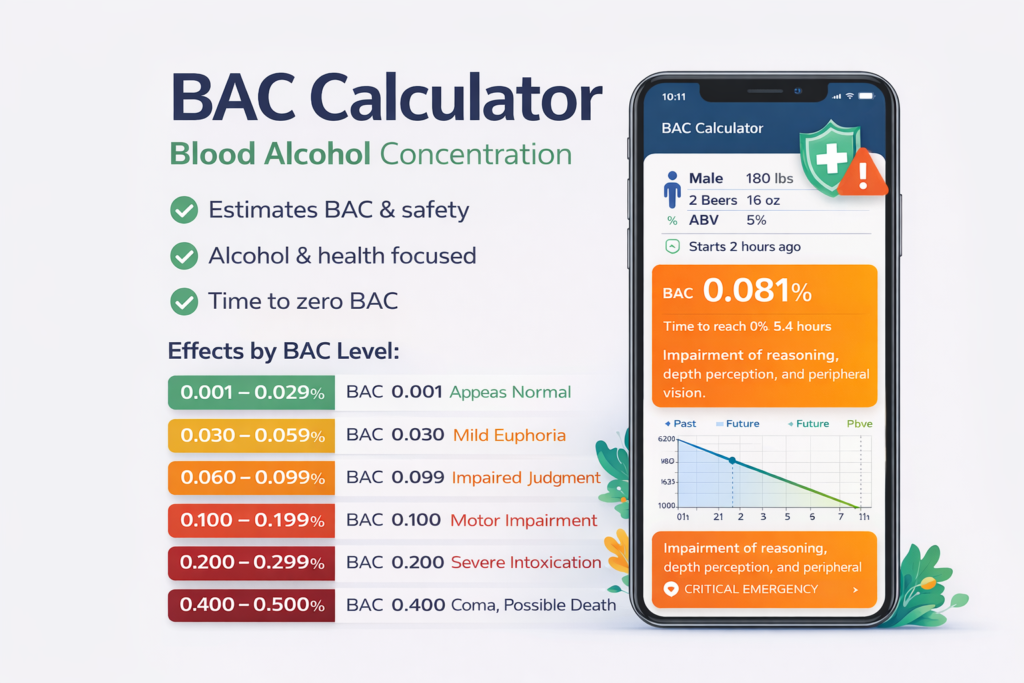
Alcohol and the Human Body (Medical Perspective)
Alcohol is a central nervous system depressant. Once consumed:
- Alcohol is absorbed through the stomach and small intestine
- It enters the bloodstream rapidly
- The liver metabolizes alcohol at a fixed rate
- Excess alcohol circulates, affecting the brain and organs
Key Medical Impacts of Alcohol
- Slows reaction time
- Impairs coordination and balance
- Reduces judgment and decision-making ability
- Alters mood and behavior
- In high amounts, suppresses breathing and heart rate
This is why tracking BAC using a bac calculator is medically relevant.
Effects by Blood Alcohol Concentration (BAC)
Below is a medically recognized breakdown of alcohol’s effects at different BAC levels.
BAC 0.001% – 0.029%
Condition:
- Appears normal
- No obvious impairment
Medical Notes:
Subtle changes may be detectable only through specialized tests.
BAC 0.030% – 0.059%
Effects:
- Mild euphoria
- Relaxation
- Decreased inhibition
Medical Impact:
Judgment begins to decline. Risk-taking behavior increases.
BAC 0.060% – 0.099%
Effects:
- Impaired reasoning
- Reduced depth perception
- Decreased peripheral vision
Medical Impact:
Clear cognitive impairment. Driving and complex tasks become unsafe.
BAC 0.100% – 0.199%
Effects:
- Significant motor impairment
- Slurred speech
- Poor reaction time
- Loss of coordination
Medical Impact:
High risk of injury, accidents, and legal intoxication.
BAC 0.200% – 0.299%
Effects:
- Nausea and vomiting
- Emotional instability
- Memory blackouts
Medical Impact:
Severe intoxication. Alcohol poisoning risk increases significantly.
BAC 0.300% – 0.399%
Effects:
- Stupor
- Loss of understanding
- Possible unconsciousness
Medical Impact:
Life-threatening condition. Emergency medical attention required.
BAC 0.400% – 0.500%
Effects:
- Coma
- Suppressed breathing
- Possible death
Medical Impact:
Critical emergency. High mortality risk.
BAC Above 0.500%
Medical Outcome:
- Extremely high probability of death
Time to Zero BAC Calculator: Why It Matters
A time to zero BAC calculator estimates how long it takes for alcohol to leave the bloodstream.
Important Medical Fact:
Only time lowers BAC — not coffee, water, sleep, or exercise.
Average alcohol elimination rate:
- ~0.015% BAC per hour
Knowing your time to zero BAC helps prevent:
- Unsafe driving
- Alcohol-related injuries
- Health complications
Why Use a BAC Calculator for Health Awareness?
A BAC calculator is not just for legal limits — it is a health education tool.
Medical Benefits:
- Encourages responsible drinking
- Helps recognize dangerous intoxication levels
- Raises awareness of alcohol poisoning risks
- Supports safer decision-making
Healthcare professionals often emphasize BAC awareness to reduce alcohol-related harm.
Limitations of BAC Calculators
Even the most accurate BAC calculator provides estimates, not exact measurements.
BAC can vary based on:
- Food intake
- Medications
- Liver health
- Hydration level
- Genetics
For medical emergencies, always seek professional care.
Conclusion: BAC Calculators and Medical Safety
A BAC level calculator is a valuable tool for understanding how alcohol affects the body from a medical health perspective. By tracking BAC, users gain insight into impairment levels, health risks, and recovery time.
Using a bac alcohol calculator responsibly can help:
- Reduce alcohol-related accidents
- Improve personal safety
- Promote informed drinking decisions
Understanding BAC is not about restriction — it is about health, awareness, and safety.
Popular Calculator Tools
- BSA Calculator
- Period Calculator
- Ovulation Calculator
- Blood Pressure Calculator
- Pregnancy Calculator
- Conception Calculator
- Due Date Calculator
- Pregnancy Weight Gain Calculator
- Pregnancy Conception Calculator
- Total Daily Energy Expenditure (TDEE) Calculator
- BMI Calculator
- Calorie Calculator
- Body Fat Calculator
- BMR Calculator
- Ideal Weight Calculator
- Lean Body Mass Calculator