Fat Intake Calculator
| Goal | Daily Calories | Fat Intake (20–35%) | Saturated Fat (10%) | Saturated Fat (7%) |
|---|
Fat provides 9 calories per gram.
Fat Intake Calculator: Complete Guide to Daily Fat Intake, Healthy Fats, and Optimal Nutrition
Fats are some of the most misunderstood nutrients in human nutrition. For decades, fat was blamed for weight gain, heart disease, and poor health. However, modern research shows that dietary fat is essential for survival, metabolic health, hormone production, and overall fitness. The key is not eliminating fat, but consuming the right type and amount of fat based on your body, activity level, and goals.
This is where a Fat Intake Calculator becomes extremely valuable. Instead of guessing how much fat you should eat, a calculator provides scientifically calculated daily fat intake recommendations based on your calorie needs.
In this detailed guide, you will learn:
- What dietary fat is and why it matters
- Different types of fats (healthy vs unhealthy)
- How much fat you need per day
- How fat intake affects weight loss, muscle gain, and health
- How a Fat Intake Calculator works
- How to optimize fat intake for fitness and long-term health
What Is a Fat Intake Calculator?
A Fat Intake Calculator is an online health tool that estimates how much fat you should consume daily based on your:
- Age
- Gender
- Height and weight
- Activity level
- Body fat percentage (optional)
- Daily calorie needs
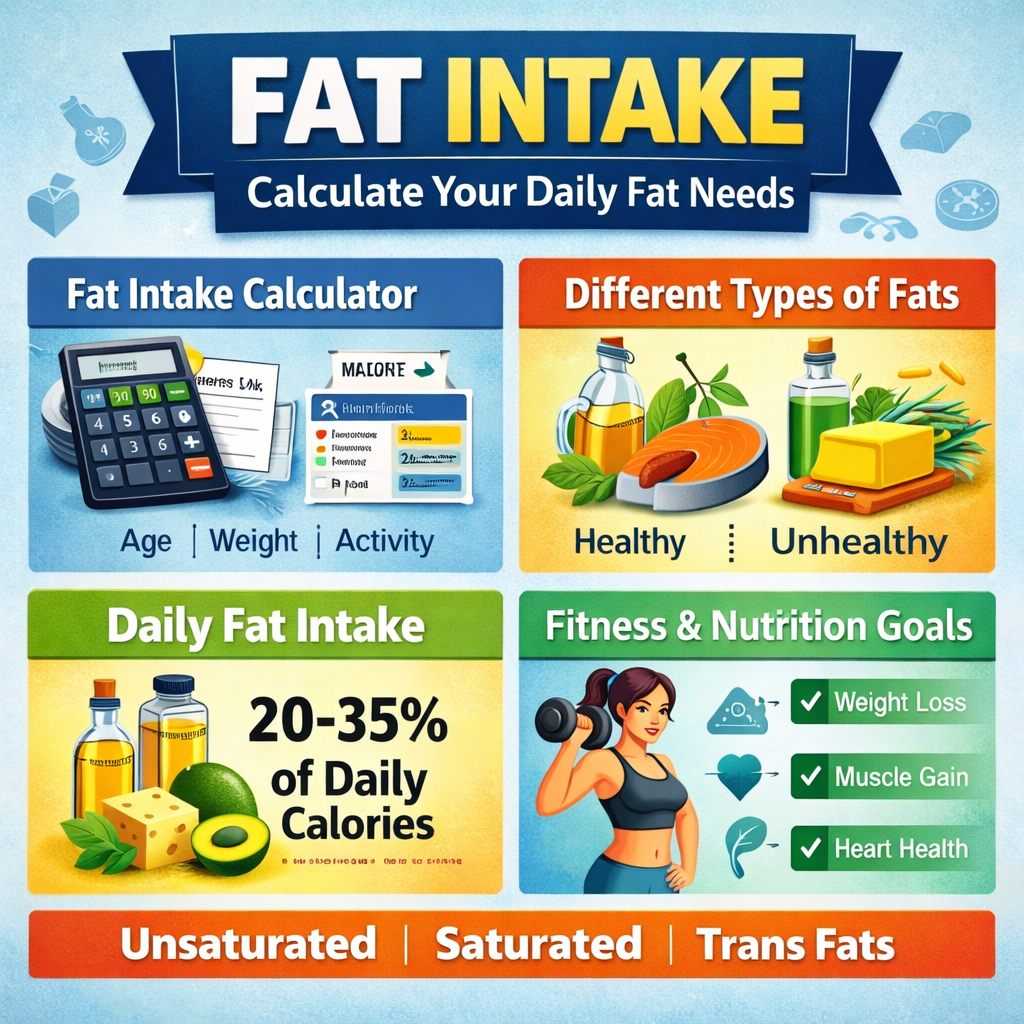
It calculates your Total Daily Energy Expenditure (TDEE) and then recommends a healthy fat intake range, usually between 20% and 35% of total calories, as suggested by major health organizations.
Since fat provides 9 calories per gram, the calculator converts fat calories into grams of fat per day, making it easy to follow in real life.
Why Is Fat Important for the Body?
Fat is not just a source of calories. It plays multiple critical roles in the body:
1. Energy Production
Fat is the most energy-dense macronutrient. It fuels long-duration activities and supports endurance.
2. Hormone Regulation
Hormones such as testosterone, estrogen, cortisol, and vitamin D rely on fat for production and balance.
3. Vitamin Absorption
Fat is necessary to absorb fat-soluble vitamins:
Vitamin A
Vitamin D
Vitamin E
Vitamin K
Without adequate fat intake, deficiencies may develop even with a nutritious diet.
4. Brain & Nervous System Health
The brain is composed largely of fat. Healthy fats improve memory, focus, and neurological function.
5. Cell Structure & Immunity
Fat supports cell membranes and immune response, helping the body fight infections and inflammation.
Daily Fat Intake Recommendations
Health authorities recommend that 20–35% of daily calories should come from fat.
General Guidelines
Minimum fat intake: 20% of calories
Optimal range: 25–35% of calories
Saturated fat: <10% of calories
Heart-health recommendation: <7% saturated fat
Example
If your daily calorie need is 2,400 calories:
Fat calories (25–30%): 600–720 calories
Fat grams: 67–80 grams per day
A Fat Intake Calculator automates this calculation accurately.
Types of Dietary Fats Explained
Not all fats are equal. Understanding fat types is essential for health and fitness.
1. Unsaturated Fats (Healthy Fats)
Unsaturated fats are considered heart-healthy and should form the majority of your fat intake.
Monounsaturated Fats
Benefits:
- Improve cholesterol levels
- Reduce inflammation
- Support heart health
Food sources:
- Olive oil
- Avocados
- Nuts (almonds, peanuts, cashews)
- Seeds
Polyunsaturated Fats
Includes omega-3 and omega-6 fatty acids.
Omega-3 Fatty Acids
Benefits:
- Reduce inflammation
- Improve heart and brain health
- Support joint function
Sources:
- Fatty fish (salmon, sardines)
- Flaxseeds
- Chia seeds
- Walnuts
Omega-6 Fatty Acids
Necessary but should be balanced with omega-3.
Sources:
- Vegetable oils
- Nuts and seeds
2. Saturated Fats (Limit Intake)
Saturated fats are solid at room temperature and should be consumed in moderation.
Excess saturated fat intake is linked to:
- Higher LDL cholesterol
- Increased heart disease risk
Sources:
- Butter
- Cheese
- Full-fat dairy
- Fatty cuts of meat
- Coconut oil
A Fat Intake Calculator limits saturated fat to 10% or less of total calories, with 7% recommended for heart health.
3. Trans Fats (Avoid Completely)
Trans fats are artificially created fats and are extremely harmful.
Health risks:
- Increased heart disease risk
- Inflammation
- Insulin resistance
Sources:
- Fried foods
- Processed snacks
- Margarine
- Baked goods
There is no safe level of trans fat intake.
How a Fat Intake Calculator Works?
A Fat Intake Calculator typically follows these steps:
Step 1: Calculate BMR
Basal Metabolic Rate (BMR) is the number of calories your body burns at rest.
Two common formulas:
Mifflin–St Jeor (most accurate for general population)
Katch–McArdle (uses lean body mass for higher precision)
Step 2: Calculate TDEE
BMR is multiplied by your activity level to get Total Daily Energy Expenditure.
Step 3: Adjust for Goals
Weight loss: calorie deficit
Muscle gain: calorie surplus
Maintenance: stable intake
Step 4: Calculate Fat Intake
20–35% of total calories allocated to fat
Converted into grams
Fat Intake for Different Fitness Goals
Weight Loss
- Moderate fat intake (20–25%)
- Focus on unsaturated fats
- Avoid processed fats
Muscle Gain
- Higher calorie intake allows slightly higher fat
- Supports hormone production
- Combine with adequate protein
Athletes
- Supports endurance and recovery
- Omega-3 fats reduce inflammation
- Balanced fat intake improves performance
Common Fat Intake Mistakes
- Eliminating fat completely
- Overconsuming saturated fat
- Ignoring omega-3 intake
- Eating processed trans fats
- Not tracking fat intake
This Fat Intake Calculator prevents these mistakes by providing clear targets.
Best Foods for Healthy Fat Intake
- Olive oil
- Avocados
- Nuts and seeds
- Fatty fish
- Eggs
- Nut butters
How to Use Calculator Effectively
- Enter accurate body data
- Choose the correct formula
- Select your activity level honestly
- Follow fat gram ranges consistently
- Adjust as goals change
Benefits of Using a Fat Intake Calculator
- Personalized nutrition
- Better weight management
- Improved heart health
- Hormonal balance
- Optimized fitness performance
Fat is not your enemy. The type and amount of fat you eat determine whether it supports your health or harms it. Using a Fat Intake Calculator removes confusion and provides clear, science-based recommendations tailored to your body and lifestyle.
Whether your goal is fat loss, muscle gain, or better health, tracking daily fat intake is a powerful step toward long-term success.
Use a reliable Fat Intake Calculator, focus on healthy fats, limit saturated fats, avoid trans fats, and enjoy the benefits of a balanced, sustainable diet.
Popular Calculator Tools
- Period Calculator
- Loan Calculator
- Ovulation Calculator
- Home Equity Line of Credit (HELOC) Calculator
- Blood Pressure Calculator
- Pregnancy Calculator
- Conception Calculator
- Due Date Calculator
- Pregnancy Weight Gain Calculator
- Pregnancy Conception Calculator
- Total Daily Energy Expenditure (TDEE) Calculator
- Interest Rate Calculator
- Annuity Calculator
- Annuity Payout Calculator
- ROI Calculator
- Sales Tax Calculator
- VAT Calculator
- BMI Calculator
- Calorie Calculator
- Body Fat Calculator
- BMR Calculator
- Ideal Weight Calculator
- Lean Body Mass Calculator
- Percentage Calculator
- Area Calculator
- GPA Calculator
- CGPA Calculator
- Age Calculator
- Zakat Calculator