Pregnancy Weight Gain Calculator
Recommended Total Body Weight by Week
Pregnancy Weight Gain Calculator: Complete Guide for Healthy Pregnancy
A pregnancy weight gain calculator helps expectant mothers understand how much weight they should gain during pregnancy based on their pre-pregnancy BMI, height, and current pregnancy week. Gaining the right amount of weight is essential for the health of both the mother and the developing baby.
Using a pregnancy weight gain calculator allows you to track progress week by week, avoid complications linked to too little or too much weight gain, and make informed nutritional choices throughout pregnancy.
What Is a Pregnancy Weight Gain Calculator?
A pregnancy weight gain calculator estimates the recommended weight range for each week of pregnancy. It uses internationally accepted medical guidelines, primarily from the Institute of Medicine (IOM) and supported by ACOG (American College of Obstetricians and Gynecologists).
The calculator typically considers:
- Pre-pregnancy weight
- Height
- Pregnancy week
- Body Mass Index (BMI)
- Singleton or twin pregnancy (if applicable)
It then provides:
- Recommended weight range for the current week
- Total recommended weight gain by week 40
- Whether current weight is below, within, or above the healthy range
How Pregnancy Weight Gain Is Calculated
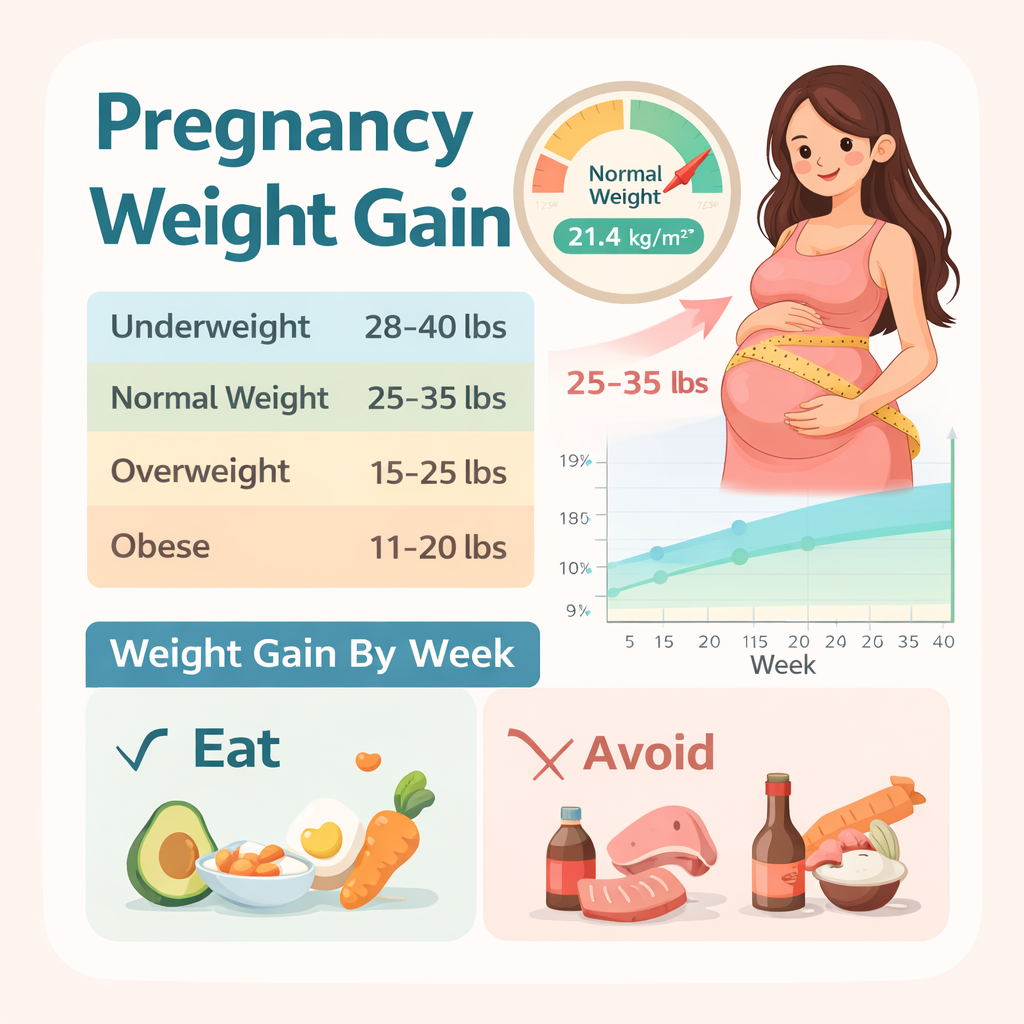
Weight gain recommendations are based on pre-pregnancy BMI (kg/m²).
BMI Categories
| BMI Category | BMI (kg/m²) |
|---|---|
| Underweight | Below 18.5 |
| Normal weight | 18.5 – 24.9 |
| Overweight | 25.0 – 29.9 |
| Obese | 30 or higher |
Recommended Weight Gain During Pregnancy
| BMI Category | Recommended Gain |
|---|---|
| Underweight | 12.5 – 18 kg (28–40 lbs) |
| Normal weight | 11.5 – 16 kg (25–35 lbs) |
| Overweight | 7 – 11.5 kg (15–25 lbs) |
| Obese | 5 – 9 kg (11–20 lbs) |
Weekly Weight Gain by Trimester
First Trimester (Weeks 1–12)
- Weight gain is usually slow
- Total gain: 0.5 – 2 kg
- Nausea and vomiting may limit weight gain
Second & Third Trimesters (Weeks 13–40)
| BMI Category | Weekly Gain |
|---|---|
| Underweight | 0.44 – 0.58 kg/week |
| Normal weight | 0.35 – 0.50 kg/week |
| Overweight | 0.23 – 0.33 kg/week |
| Obese | 0.17 – 0.27 kg/week |
Why Healthy Weight Gain During Pregnancy Is Important
Proper weight gain supports:
- Fetal growth and organ development
- Placenta formation
- Amniotic fluid volume
- Maternal blood volume increase
- Energy reserves for breastfeeding
Both too little and too much weight gain can lead to complications.
Potential Complications of Inadequate Weight Gain
Gaining less weight than recommended may increase the risk of:
- Low birth weight baby
- Preterm birth
- Poor fetal growth (IUGR)
- Nutrient deficiencies
- Reduced breast milk supply postpartum
- Higher infant morbidity
Underweight mothers require closer nutritional monitoring.
Potential Complications of Excessive Weight Gain
Gaining more weight than recommended may lead to:
- Gestational diabetes
- High blood pressure & preeclampsia
- Large-for-gestational-age baby (macrosomia)
- Cesarean delivery
- Postpartum weight retention
- Childhood obesity risk for the baby
What to Eat During Pregnancy (Healthy Diet Guide)
A balanced pregnancy diet should focus on nutrient density, not just calories.
Essential Nutrients
Protein
Supports fetal growth and maternal tissues.
- Eggs
- Lean meat
- Fish (low mercury)
- Beans & lentils
- Greek yogurt
Complex Carbohydrates
Provide steady energy.
- Whole grains
- Brown rice
- Oats
- Sweet potatoes
Healthy Fats
Support brain and eye development.
- Avocados
- Nuts & seeds
- Olive oil
- Fatty fish (salmon)
Calcium
For bone and teeth development.
- Milk
- Yogurt
- Cheese
- Fortified plant milk
Iron
Prevents anemia.
- Red meat
- Spinach
- Beans
- Iron-fortified cereals
Folic Acid
Prevents neural tube defects.
- Leafy greens
- Citrus fruits
- Fortified grains
- Prenatal supplements
Foods to Avoid During Pregnancy
Certain foods increase the risk of infection or harm to the baby.
Avoid Completely
- Raw or undercooked meat
- Unpasteurized milk & cheese
- Raw eggs
- High-mercury fish (shark, swordfish)
- Alcohol
Limit
- Caffeine (≤200 mg/day)
- Processed foods
- Sugary drinks
- Excess salt
How Many Extra Calories Are Needed in Pregnancy?
| Trimester | Extra Calories |
|---|---|
| First trimester | None or minimal |
| Second trimester | ~340 kcal/day |
| Third trimester | ~450 kcal/day |
Pregnancy Weight Gain Calculator: Why Use One?
Using a calculator helps you:
- Track progress visually
- Stay within healthy limits
- Reduce pregnancy risks
- Make informed dietary choices
- Prepare for delivery and recovery
It provides personalized guidance, unlike generic charts.
Frequently Asked Questions (FAQ)
Is weight loss safe during pregnancy?
Intentional weight loss is not recommended unless supervised by a doctor.
Can I gain weight unevenly?
Yes. Weight gain varies by trimester and individual metabolism.
What if my weight gain is outside the range?
Occasional variations are normal, but persistent deviation should be discussed with a healthcare provider.
Popular Calculator Tools
- Period Calculator
- Loan Calculator
- Ovulation Calculator
- Home Equity Line of Credit (HELOC) Calculator
- Blood Pressure Calculator
- Pregnancy Calculator
- Conception Calculator
- Due Date Calculator
- Pregnancy Conception Calculator
- Total Daily Energy Expenditure (TDEE) Calculator
- Fat Intake Calculator
- Interest Rate Calculator
- Annuity Calculator
- Annuity Payout Calculator
- ROI Calculator
- Sales Tax Calculator
- VAT Calculator
- BMI Calculator
- Calorie Calculator
- Body Fat Calculator
- BMR Calculator
- Ideal Weight Calculator
- Lean Body Mass Calculator
- Percentage Calculator
- Area Calculator
- GPA Calculator
- CGPA Calculator
- Age Calculator
- Zakat Calculator