
Blood Pressure & MAP Calculator (ACC/AHA)
| Category | Systolic | Diastolic |
|---|---|---|
| Normal | <120 | <80 |
| Elevated | 120–129 | <80 |
| Hypertension Stage 1 | 130–139 | 80–89 |
| Hypertension Stage 2 | ≥140 | ≥90 |
| Hypertensive Crisis | ≥180 | ≥120 |
Based on ACC/AHA blood pressure guidelines. MAP is calculated using the standard clinical formula. This tool is for informational purposes only.
Blood Pressure (BP): Complete Guide, And calculate mean arterial pressure from blood pressure
Blood pressure (BP) is a critical indicator of cardiovascular health. It measures the force exerted by circulating blood against the walls of the arteries. Abnormal blood pressure—either too high or too low—can significantly increase the risk of heart disease, stroke, kidney damage, and other serious health conditions.
Understanding blood pressure values, their classifications, causes, and management strategies is essential for maintaining long-term health.
What Is Blood Pressure?
Blood pressure is recorded as two numbers:
Systolic Blood Pressure (SBP): Pressure in the arteries when the heart contracts.
Diastolic Blood Pressure (DBP): Pressure in the arteries when the heart relaxes between beats.
Example: 120/80 mmHg
Blood pressure naturally fluctuates throughout the day due to physical activity, emotional stress, posture, and dietary factors.
Types of Blood Pressure Conditions
Normal Blood Pressure
Systolic BP (SBP): Less than 120 mmHg
Diastolic BP (DBP): Less than 80 mmHg
Description:
Normal blood pressure is considered healthy and associated with a low risk of cardiovascular events. Lifestyle maintenance is key.
Management:
Maintain healthy diet (DASH diet recommended)
Regular exercise
Maintain healthy weight
Limit alcohol and avoid smoking
Elevated Blood Pressure
SBP: 120–129 mmHg
DBP: Less than 80 mmHg
Description:
This stage is not considered hypertension yet, but individuals are at increased risk of developing hypertension.
Management:
Lifestyle modification is recommended
Reduce sodium intake
Increase physical activity
Weight loss if overweight
Stress management
Hypertension Stage 1
SBP: 130–139 mmHg
DBP: 80–89 mmHg
Description:
Stage 1 hypertension is the first threshold where medication may be considered, depending on cardiovascular risk.
Management:
Lifestyle modification (same as elevated BP)
Medication:
If 10-year ASCVD (atherosclerotic cardiovascular disease) risk ≥10% or existing cardiovascular disease (CVD), medication is recommended in addition to lifestyle changes.
Risk:
Increases the likelihood of heart attack, stroke, kidney disease if left untreated.
Hypertension Stage 2
SBP: ≥140 mmHg
DBP: ≥90 mmHg
Description:
Stage 2 hypertension represents a more severe elevation and requires prompt treatment.
Management:
Lifestyle changes (as above)
Medication:
Usually two drugs from different classes are recommended for initial therapy in many patients.
Risk:
High risk of cardiovascular events, organ damage, and progression of disease if untreated.
Hypertensive Crisis
SBP: >180 mmHg
DBP: >120 mmHg
Description:
This is a medical emergency. Immediate evaluation is required to prevent acute complications such as stroke, heart attack, or kidney failure.
Management:
Hypertensive urgency: No immediate organ damage, may require oral medications and close follow-up
Hypertensive emergency: Evidence of target organ damage (heart, brain, kidney), requires intravenous medication and hospitalization
Isolated Systolic or Diastolic Hypertension
Isolated Systolic Hypertension:
SBP ≥130 mmHg and DBP <80 mmHg
Common in older adults due to arterial stiffness
Isolated Diastolic Hypertension:
SBP <130 mmHg and DBP ≥80 mmHg
Less common, may occur in younger adults
Management: Tailored based on age, comorbidities, and cardiovascular risk.
Essential (Primary) Hypertension
Essential hypertension, also known as primary hypertension, accounts for about 90–95% of hypertension cases. It has no identifiable single cause and develops gradually over time.
Causes and Risk Factors
Genetic predisposition
Aging
High sodium intake
Obesity
Physical inactivity
Chronic stress
Smoking and alcohol use
Characteristics
Develops slowly over years
Often asymptomatic
Requires long-term management
Management
Lifestyle modifications
Long-term medication when needed
Regular blood pressure monitoring
Secondary (Non-Essential) Hypertension
Secondary hypertension (often called non-essential hypertension) results from an underlying medical condition and accounts for 5–10% of cases.
Common Causes
Kidney disease
Hormonal disorders (thyroid, adrenal glands)
Sleep apnea
Certain medications (NSAIDs, steroids, birth control pills)
Congenital blood vessel abnormalities
Characteristics
Sudden onset
Often severe
Resistant to standard treatments
Management
Treating the underlying condition
Targeted medications
Specialist care
Identifying secondary hypertension is crucial because it may be reversible.
What Is a Blood Pressure Calculator?
A blood pressure calculator is an online tool that:
- Accepts systolic and diastolic readings
- Classifies BP according to recognized guidelines
- Helps users understand their BP category instantly
How a Blood Pressure Calculator Works?
- User inputs BP readings
- Calculator compares values to guideline thresholds
- BP category is displayed
- Results guide lifestyle or medical decisions
calculate mean arterial pressure from blood pressure
Mean Arterial Pressure (MAP) represents the average pressure in the arteries during one cardiac cycle. It is commonly estimated from systolic and diastolic blood pressure using a standard clinical formula.
Formula
calculating map from blood pressure
- Identify blood pressure values
- Systolic BP (SBP): top number
- Diastolic BP (DBP): bottom number
- Calculate pulse pressure
- Pulse Pressure = SBP − DBP
- Add one-third of pulse pressure to diastolic BP
Example
- Blood Pressure: 120/80 mmHg
- Pulse Pressure = 120 − 80 = 40
- MAP = 80 + (1/3 × 40)
- MAP = 80 + 13.3 ≈ 93 mmHg
Interpretation (General Reference)
- Typical MAP range for adequate organ perfusion: 70–100 mmHg
- Values below this range may indicate reduced tissue perfusion; higher values suggest increased arterial pressure.
This calculation is an estimate used in routine clinical practice and health calculators; direct arterial measurement provides the most accurate MAP.
Causes of High Blood Pressure
- Excess salt intake
- Poor diet
- Obesity
- Sedentary lifestyle
- Smoking
- Excess alcohol
- Stress
- Genetic factors
- Chronic kidney disease
Symptoms of High Blood Pressure
- Headaches
- Vision problems
- Chest discomfort
- Shortness of breath
- Nosebleeds (rare)
Prevention of High Blood Pressure
Lifestyle Measures
- Reduce sodium intake
- Follow the DASH diet
- Exercise at least 150 minutes per week
- Maintain healthy weight
- Manage stress
- Quit smoking
Treatment of High Blood Pressure
Lifestyle Modifications (First-line Therapy for All Stages)
Lifestyle changes are critical at all stages of hypertension, especially for elevated BP and Stage 1 hypertension.
A. Dietary Changes
- DASH Diet (Dietary Approaches to Stop Hypertension)
- Rich in fruits, vegetables, whole grains
- Low in saturated fat, cholesterol, and red meat
- High in potassium, calcium, magnesium
- Sodium restriction:
- Limit to <2,300 mg/day (ideally <1,500 mg/day for better BP control)
- Limit processed foods and sugary drinks
B. Weight Management
- Goal: BMI 18.5–24.9 kg/m²
- Weight loss: Each 1 kg of weight loss can reduce SBP by ~1 mmHg
C. Physical Activity
- Aerobic exercise: 150 minutes/week of moderate-intensity (brisk walking, swimming, cycling)
- Resistance training: 2–3 days/week
- Effect: Lowers SBP by 4–9 mmHg
D. Alcohol & Tobacco
- Limit alcohol: ≤2 drinks/day (men), ≤1 drink/day (women)
- Avoid smoking – accelerates vascular damage
E. Stress Management
- Mindfulness, yoga, meditation, deep breathing techniques
Pharmacologic Therapy
Medication is required when lifestyle changes alone are insufficient or if BP is Stage 2 or if Stage 1 BP with high cardiovascular risk.
First-line Medications
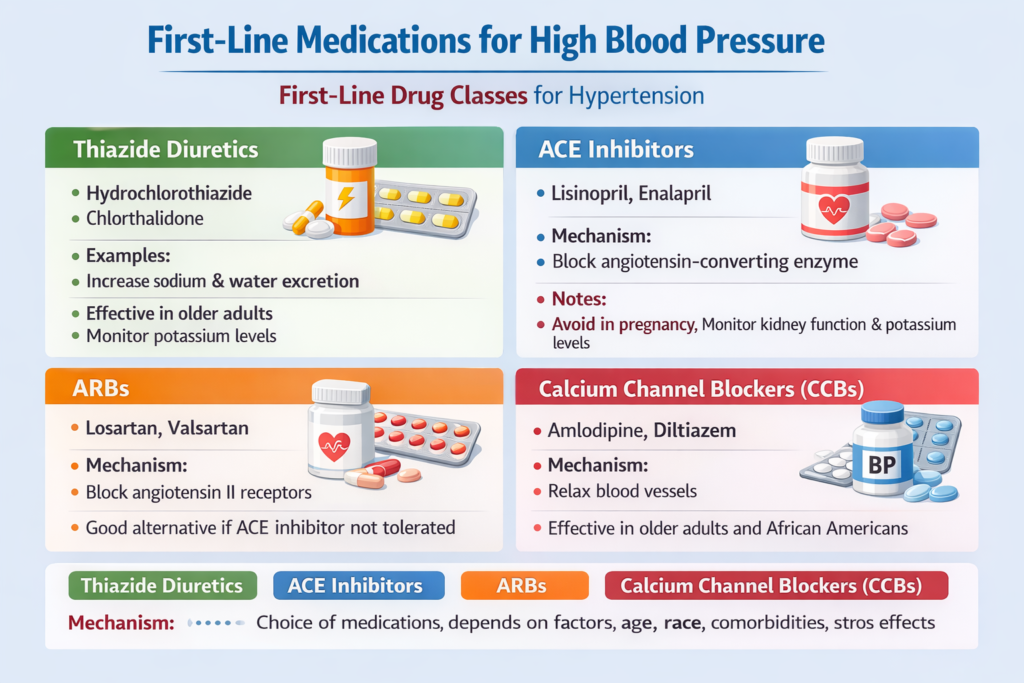
B. Combination Therapy
Often needed in Stage 2 hypertension or uncontrolled BP
ACC/AHA recommends starting with two drugs from different classes if BP is ≥20/10 mmHg above goal
Example combinations:
ACE inhibitor + Thiazide diuretic
ARB + CCB
C. Special Considerations
Diabetes – ACE inhibitors or ARBs preferred to protect kidneys
Chronic Kidney Disease (CKD) – ACE inhibitors/ARBs preferred
Heart Failure – Beta-blockers and ACE inhibitors
Pregnancy – Avoid ACE inhibitors, ARBs, direct renin inhibitors; use labetalol, nifedipine, methyldopa
Hypertensive Crisis Management
A. Hypertensive Urgency (BP >180/120 without organ damage)
Oral medications: Labetalol, Captopril, Clonidine
Goal: Reduce BP gradually over 24–48 hours
B. Hypertensive Emergency (BP >180/120 with organ damage)
IV medications: Nitroprusside, Nicardipine, Labetalol
Immediate hospitalization required
Target: Lower BP carefully to prevent hypoperfusion (usually reduce by 25% in first hour)
Goals of Treatment
- General population: BP <130/80 mmHg
- Older adults (≥65 years): Target SBP 130–139 mmHg if tolerated
- Diabetes/CKD: BP <130/80 mmHg
Importance of Using a BP Calculator
- Increase awareness
- Encourage early intervention
- Support long-term BP tracking
Popular Calculator Tools
- Period Calculator
- Loan Calculator
- Ovulation Calculator
- Home Equity Line of Credit (HELOC) Calculator
- Pregnancy Calculator
- Conception Calculator
- Due Date Calculator
- Pregnancy Weight Gain Calculator
- Pregnancy Conception Calculator
- Total Daily Energy Expenditure (TDEE) Calculator
- Fat Intake Calculator
- Interest Rate Calculator
- Annuity Calculator
- Annuity Payout Calculator
- ROI Calculator
- Sales Tax Calculator
- VAT Calculator
- BMI Calculator
- Calorie Calculator
- Body Fat Calculator
- BMR Calculator
- Ideal Weight Calculator
- Lean Body Mass Calculator
- Percentage Calculator
- Area Calculator
- GPA Calculator
- CGPA Calculator
- Age Calculator
- Zakat Calculator