Calorie Calculator
Healthy Weight Loss Guide: Balanced Diet, Smart Calories & Sustainable HabitsYour Attractive Heading
Introduction
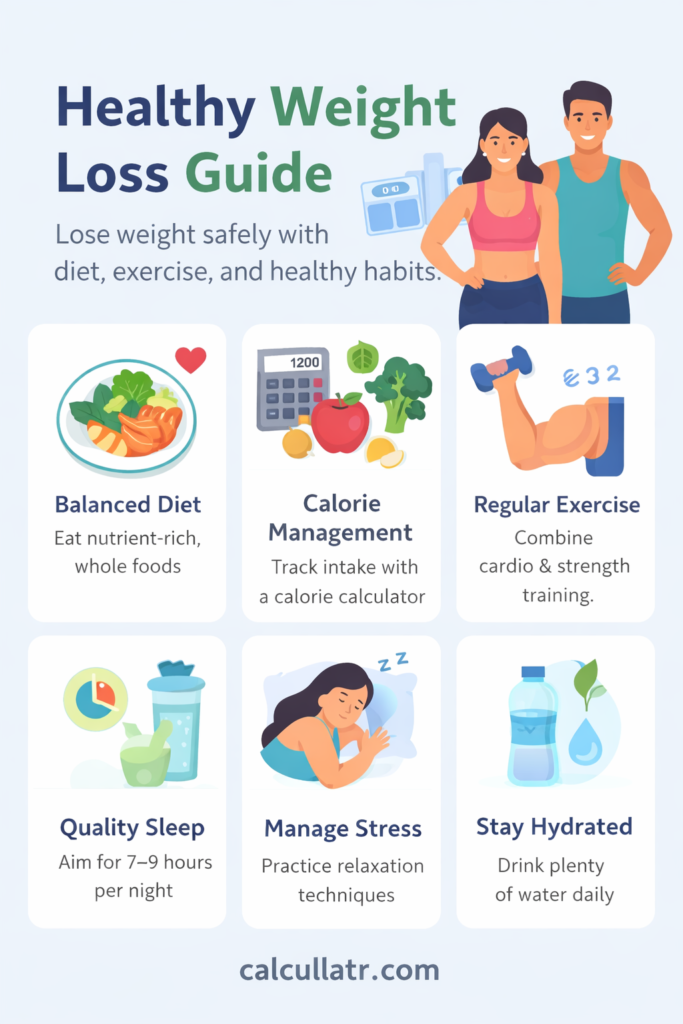
Achieving and maintaining a healthy weight is not about extreme dieting or quick fixes. True weight loss comes from understanding your body, eating a balanced diet, staying active, and building long-term habits that support overall health. This guide explains the best ways to lose weight safely, how calories work, and how lifestyle choices affect your body. Our calorie calculator helps you estimate your daily calorie needs based on age, gender, height, weight, and activity level.
Understanding Weight Loss and Calories
Weight loss occurs when you burn more calories than you consume, creating a calorie deficit. Calories are units of energy that your body uses to perform daily functions such as breathing, digestion, movement, and exercise.
Calorie surplus → weight gain
Calorie balance → weight maintenance
Calorie deficit → weight loss
Using tools like a calorie calculator helps estimate your daily calorie needs based on age, gender, height, weight, and activity level.
Safe and Sustainable Weight Loss
The healthiest rate of weight loss is 0.25–0.5 kg (0.5–1 lb) per week. Rapid weight loss can lead to muscle loss, nutrient deficiencies, hormonal imbalance, and fatigue.
Healthy weight loss principles:
Avoid extreme calorie restriction
Focus on consistency, not speed
Combine diet with physical activity
Prioritize overall health, not just scale weight
Balanced Diet for Weight Loss
A balanced diet provides all essential nutrients while keeping calorie intake under control.
Protein: The Foundation
Protein helps preserve muscle, increases satiety, and boosts metabolism.
Best protein sources:
Eggs
Lean meat and poultry
Fish and seafood
Lentils, beans, chickpeas
Greek yogurt and cottage cheese
Aim to include protein in every meal.
Healthy Carbohydrates
Carbohydrates are an important energy source, but quality matters.
Choose complex carbs:
Whole grains (brown rice, oats)
Vegetables
Fruits
Legumes
Limit refined carbs:
Sugary snacks
White bread
Sweetened beverages
Healthy Fats
Fats support hormone balance and nutrient absorption.
Healthy fat sources:
Olive oil
Nuts and seeds
Avocados
Fatty fish (salmon, sardines)
Avoid trans fats and excessive fried foods.
Portion Control and Mindful Eating
Even healthy foods can cause weight gain if eaten in large portions.
Tips for portion control:
Use smaller plates
Eat slowly and without distractions
Stop eating when comfortably full
Avoid emotional eating
Mindful eating improves digestion and prevents overeating.
Importance of Physical Activity
Exercise increases calorie burn and improves overall health.
Best exercises for weight loss:
Cardio: walking, jogging, cycling, swimming
Strength training: weights, resistance bands, bodyweight exercises
Daily movement: stairs, stretching, active breaks
Aim for 150–300 minutes of moderate activity per week.
Strength Training and Muscle Preservation
Strength training is essential during weight loss to prevent muscle loss.
Benefits:
Increases metabolism
Improves body shape
Enhances bone strength
Train major muscle groups at least 2–3 times per week.
Sleep and Weight Loss
Poor sleep disrupts hunger hormones and increases cravings.
Recommendations:
Sleep 7–9 hours per night
Maintain a consistent sleep schedule
Avoid screens before bedtime
Good sleep supports fat loss and recovery.
Hydration and Weight Management
Drinking enough water helps control appetite and supports metabolism.
Tips:
Drink water before meals
Replace sugary drinks with water
Stay hydrated throughout the day
Sometimes thirst is mistaken for hunger.
Stress Management and Hormonal Balance
Chronic stress raises cortisol levels, which can lead to fat storage.
Stress reduction strategies:
Meditation and deep breathing
Walking outdoors
Yoga or stretching
Proper work-life balance
Managing stress improves weight loss results.
Common Weight Loss Mistakes to Avoid
Skipping meals
Cutting entire food groups
Relying on fad diets
Ignoring strength training
Expecting overnight results
Sustainable progress always beats quick fixes.
Using Calorie Calculator Effectively
Calorie calculator provide estimates, not exact numbers.
Best practices:
Use them as a guideline
Adjust calories based on progress
Recalculate as weight changes
Consistency matters more than perfection.
Weight Loss for Long-Term Health
Healthy weight loss reduces the risk of:
Heart disease
Type 2 diabetes
High blood pressure
Joint problems
Fatty liver disease
The goal is not just weight loss, but better health and quality of life.
Final Thoughts
Weight loss is a journey that requires patience, balance, and commitment. By combining a nutritious diet, regular physical activity, proper sleep, stress management, and realistic calorie goals, you can achieve sustainable results.
Use reliable tools like calorie calculators, listen to your body, and focus on long-term habits rather than temporary solutions.
Disclaimer: This article is for informational purposes only and does not replace professional medical advice. Always consult a healthcare provider before making significant lifestyle changes.
common food sources of carbohydrates, proteins, and fats (100 grams)
| Food Item | Category | Calories (kcal) | Carbohydrates (g) | Protein (g) | Fat (g) |
|---|---|---|---|---|---|
| White Rice (cooked) | Carbs | 130 | 28 | 2.7 | 0.3 |
| Brown Rice (cooked) | Carbs | 123 | 26 | 2.7 | 1.0 |
| Oats | Carbs | 389 | 66 | 17 | 7 |
| Whole Wheat Bread | Carbs | 247 | 41 | 13 | 4.2 |
| Potato (boiled) | Carbs | 87 | 20 | 1.9 | 0.1 |
| Banana | Carbs | 89 | 23 | 1.1 | 0.3 |
| Chicken Breast (skinless) | Protein | 165 | 0 | 31 | 3.6 |
| Egg (whole) | Protein | 155 | 1.1 | 13 | 11 |
| Salmon | Protein | 208 | 0 | 20 | 13 |
| Tuna | Protein | 132 | 0 | 28 | 1 |
| Lentils (cooked) | Protein | 116 | 20 | 9 | 0.4 |
| Chickpeas (cooked) | Protein | 164 | 27 | 9 | 2.6 |
| Olive Oil | Fat | 884 | 0 | 0 | 100 |
| Butter | Fat | 717 | 0.1 | 0.9 | 81 |
| Almonds | Fat | 579 | 22 | 21 | 50 |
| Peanuts | Fat | 567 | 16 | 26 | 49 |
| Avocado | Fat | 160 | 9 | 2 | 15 |
| Cheese (cheddar) | Fat | 402 | 1.3 | 25 | 33 |
Popular Calculator Tools
- Interest Rate Calculator
- Annuity Calculator
- Annuity Payout Calculator
- ROI Calculator
- Sales Tax Calculator
- VAT Calculator
- BMI Calculator
- Period Calculator
- Loan Calculator
- Ovulation Calculator
- Home Equity Line of Credit (HELOC) Calculator
- Blood Pressure Calculator
- Pregnancy Calculator
- Conception Calculator
- Due Date Calculator
- Pregnancy Weight Gain Calculator
- Pregnancy Conception Calculator
- Total Daily Energy Expenditure (TDEE) Calculator
- Fat Intake Calculator
- Body Fat Calculator
- BMR Calculator
- Ideal Weight Calculator
- Lean Body Mass Calculator
- Percentage Calculator
- Area Calculator
- GPA Calculator
- CGPA Calculator
- Age Calculator
- Zakat Calculator