
BMI Calculator
Underweight
Normal
Overweight
Obese
| BMI (kg/m²) | Classification | Health Risk |
|---|---|---|
| Below 18.5 | Underweight | Low body weight, possible nutritional deficiency |
| 18.5 – 24.9 | Normal weight | Healthy weight range |
| 25.0 – 29.9 | Overweight | Increased health risk |
| 30.0 – 34.9 | Obese (Class I) | High health risk |
| 35.0 – 39.9 | Obese (Class II) | Very high health risk |
| 40.0 and above | Obese (Class III) | Extremely high health risk |
BMI Calculator – Complete Guide to Body Mass Index
What is BMI (Body Mass Index)?
Body Mass Index (BMI) is a simple and widely used measurement that helps determine whether a person has a healthy body weight for their height. It is calculated using a person’s weight and height and provides a numeric value that falls into specific health categories such as underweight, normal weight, overweight, or obese.
BMI is commonly used by doctors, fitness professionals, and health organizations worldwide as a screening tool to assess potential weight-related health risks.
How is BMI Calculated?
BMI is calculated using the following formula:
BMI = weight (kg) ÷ height² (m²)
For example:
Weight: 70 kg
Height: 1.75 m
BMI = 70 ÷ (1.75 × 1.75) = 22.9
This BMI value falls within the normal weight range.
Our online BMI calculator automatically performs this calculation for you and displays the result instantly along with a visual meter.
BMI Classification Chart (WHO Standard)
The World Health Organization (WHO) defines BMI ranges as follows:
Below 18.5 – Underweight
18.5 – 24.9 – Normal weight
25.0 – 29.9 – Overweight
30.0 – 34.9 – Obese (Class I)
35.0 – 39.9 – Obese (Class II)
40.0 and above – Obese (Class III)
These classifications help identify potential health risks associated with being underweight or overweight.
Why is BMI Important?
BMI is important because it provides a quick overview of whether a person’s weight may increase their risk of health conditions. Although it does not directly measure body fat, BMI correlates reasonably well with more direct measures of body fat for most people.
Health risks associated with abnormal BMI:
Low BMI (Underweight):
Nutritional deficiencies
Weak immune system
Fertility problems
Bone loss and osteoporosis
High BMI (Overweight & Obese):
Heart disease
High blood pressure
Type 2 diabetes
Joint problems
Certain cancers
Maintaining a BMI within the normal range can significantly reduce these health risks.
BMI for Men and Women
The BMI formula is the same for both men and women. However, body composition differs between genders. Women generally have a higher percentage of body fat than men at the same BMI value.
Despite these differences, BMI remains a reliable general screening tool for adults of both genders.
BMI and Age Considerations
BMI is designed for adults aged 18 and above. For children and teenagers, BMI interpretation differs because age and sex affect body composition.
For older adults, BMI may slightly underestimate body fat due to age-related muscle loss. In such cases, BMI should be used along with other health indicators.
Limitations of BMI
While BMI is useful, it has some limitations:
It does not distinguish between muscle and fat
Athletes may have a high BMI but low body fat
It does not account for fat distribution
It may not be accurate for pregnant women
Because of these limitations, BMI should be considered a starting point, not a diagnosis.
How to Use Our BMI Calculator
Using our BMI calculator is simple:
Enter your height (cm or inches)
Enter your weight (kg or pounds)
Click on Calculate BMI
You will instantly see:
Your BMI value
Your weight classification
A graphical meter showing your BMI range
This makes it easy to understand your results at a glance.
Tips to Maintain a Healthy BMI
Follow a balanced and nutritious diet
Stay physically active
Maintain a consistent exercise routine
Avoid excessive processed foods
Get adequate sleep
Monitor your weight regularly
Small lifestyle changes can have a significant impact on maintaining a healthy BMI.
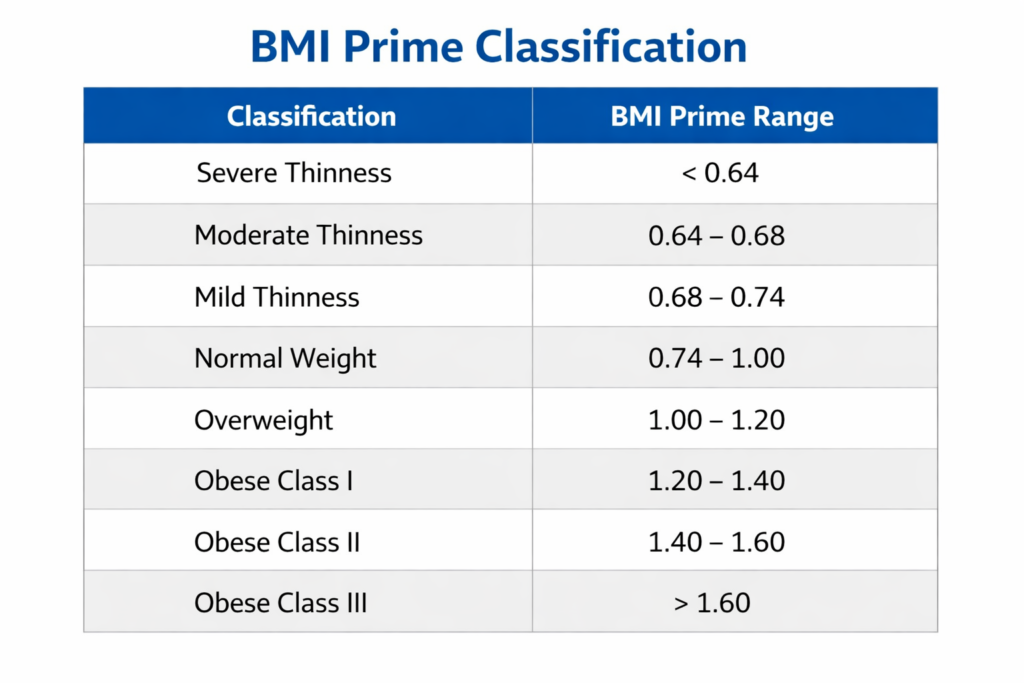
What Is BMI Prime?
BMI Prime is the ratio of a person’s BMI to the upper limit of the normal BMI range. According to the World Health Organization (WHO) and CDC, the upper normal BMI limit is 25 kg/m².
It helps measure how far a person’s BMI deviates from the normal range and allows easier comparison between individuals and populations.
BMI Prime = BMI ÷ 25
BMI Prime is a dimensionless value, meaning it has no units.
What Is the Ponderal Index (PI)?
The Ponderal Index (PI) is another body composition metric similar to BMI. The key difference is that PI uses height cubed instead of squared, making it more accurate for individuals who are very tall or very short.
BMI may overestimate or underestimate body fat at extreme heights, while PI provides better proportional accuracy.
PI = height (inches) ÷ ∛weight (pounds)
Frequently Asked Questions (FAQs)
Is BMI accurate?
BMI is accurate for most adults as a general health indicator, but it does not directly measure body fat.
What is a healthy BMI?
A BMI between 18.5 and 24.9 is considered healthy for most adults.
Can BMI predict disease?
BMI alone cannot predict disease, but a high or low BMI is associated with increased health risks.
Final Thoughts
BMI is a simple, effective, and widely accepted method for assessing body weight status. While it has limitations, it remains one of the most useful tools for understanding potential health risks related to weight.
Use our free online BMI calculator to quickly check your BMI, understand your health category, and take informed steps toward a healthier lifestyle.
Disclaimer: BMI is a general screening tool and should not replace professional medical advice. Always consult a healthcare provider for personalized health assessments.
Popular Calculator Tools
- Interest Rate Calculator
- Annuity Calculator
- Annuity Payout Calculator
- ROI Calculator
- Sales Tax Calculator
- VAT Calculator
- Period Calculator
- Loan Calculator
- Ovulation Calculator
- Home Equity Line of Credit (HELOC) Calculator
- Blood Pressure Calculator
- Pregnancy Calculator
- Conception Calculator
- Due Date Calculator
- Pregnancy Weight Gain Calculator
- Pregnancy Conception Calculator
- Total Daily Energy Expenditure (TDEE) Calculator
- Fat Intake Calculator
- Calorie Calculator
- Body Fat Calculator
- BMR Calculator
- Ideal Weight Calculator
- Lean Body Mass Calculator
- Percentage Calculator
- Area Calculator
- GPA Calculator
- CGPA Calculator
- Age Calculator
- Zakat Calculator